Few things capture the Christmas spirit quite like a real tree. The fresh scent of pine filling the air, the soft glow of fairy lights, and that instant feeling of warmth that makes a house feel festive. But the question on everyone’s mind once the tree is up is the same: how long do real Christmas trees last before the needles start falling and the magic begins to fade? The honest answer depends on the variety, how fresh it was when you bought it, and how well you look after it once it’s indoors.
Add to Preferred Sources
TL;DR
Most cut Christmas trees last 4–6 weeks indoors with proper care.
The Nordmann Fir is the longest-lasting common variety, holding its needles well even in warm rooms.
Potted Christmas trees should only be kept indoors for 1–2 weeks, then moved to a sheltered spot outside.
Water your tree daily and keep it away from radiators, open fires, and direct sunlight.
Needles turning brown or yellow, mass needle drop when touched, and dry brittle branches are the key signs a tree is past its prime.
A rootballed potted tree can be replanted in the garden after Christmas, provided the ground isn’t frozen.
Norway Spruce is the most traditional UK variety but drops needles fastest — put it up as close to Christmas as possible.
How long do real Christmas trees last indoors?
A real Christmas tree will usually last around four to six weeks indoors, depending on how well you care for it — just enough to see you through the season. Exactly how long Christmas trees last depends on the type of tree and how recently it was cut when you brought it home.
Some trees are definitely tougher than others. Nordmann firs, for instance, are known for hanging on to their needles like an absolute pro. Others can start to dry out and drop a bit sooner once they’ve been inside for a while. Fir varieties such as Balsam, Fraser, and Noble are firm favourites for good reason — they smell incredible and can stay lush and green for up to five weeks if they were nice and fresh to begin with.
How long your tree lasts also depends on its age and how it was handled before you got it. Those freshly cut, cool-stored trees from a good local seller tend to hold their sparkle a little longer.
How long does a potted Christmas tree last?
If you have a potted Christmas tree, keep it indoors for no more than one to two weeks. Push beyond that, and the tree will start to struggle — the warmth and dry air of a centrally heated home is genuinely stressful for a living tree, and it may not recover well once moved back outside.
Before bringing a rootballed tree indoors, let it acclimatise gradually: move it from outside into a cool porch or garage for a few days first, rather than going straight from frost to a warm living room. The same applies in reverse when it’s time to go back out. Move it to an unheated but sheltered spot for several days before returning it to the garden.
While the tree is indoors, keep the compost moist but not waterlogged — check it every couple of days and water when the top layer feels dry. Don’t let it sit in a saucer of standing water.
Potted and pot-grown Christmas trees can be planted back into the soil after Christmas, and this is genuinely worth doing if you have the space. Nordmann Fir (Abies nordmanniana) and Norway Spruce both do well when planted out in the UK garden. Choose a spot with decent drainage and room to grow — these trees can reach several metres over the years. Make sure the ground isn’t frozen when you plant, and mulch well around the base to help it settle. With care, your Christmas tree can become a permanent garden tree that you enjoy for decades.
How long will a cut Christmas tree last outside?
The lifespan of a cut Christmas tree outside can vary based on several factors, including the tree species, weather conditions, and how well it has been cared for before being placed outdoors. If temperatures are consistently low, the tree can last longer.
Cold weather helps slow down the drying process. High winds or direct sunlight can lead to quicker drying and needle loss, reducing the tree’s longevity. In ideal conditions, a cut Christmas tree placed outside can last anywhere from 1 to 6 weeks, depending on the species and environmental factors.
Signs your Christmas tree is dying (and what to do)
Your tree will tell you when it’s past its prime. The signs are pretty clear once you know what to look for. Needles turning brown or yellow, especially across large sections of the tree, are the most obvious signal. Mass needle drop when you touch or brush a branch is another — a fresh tree might shed a few, but handfuls falling at once means it’s drying out fast. Loss of that distinctive pine or fir scent, and branches that feel dry and brittle rather than supple, are also reliable indicators.
At that point, a dried-out tree is also a fire hazard — take it down sooner rather than later. To slow the decline in the first place, head to the watering and care section below.
Best types of Christmas trees: which one to choose?
Not all real tree varieties are the same. Are you after the best-smelling Christmas tree? Or do you want a low-maintenance, non-drop one? Different species vary considerably in how long they last once cut. The Nordmann Fir is an Abies species (Abies nordmanniana), which is why you’ll sometimes see it referred to as an Abies Christmas tree — a good detail to know when buying.
Here’s how the most popular UK varieties compare:
Tree Type
Needle Retention
Scent
Approx. Indoor Lifespan
Nordmann Fir
Excellent — low drop
Mild
Up to 5–6 weeks
Norway Spruce
Poor — drops quickly in warmth
Strong, classic pine
2–3 weeks (put up late)
Fraser Fir
Good
Pleasant, fresh
4–5 weeks
Noble Fir
Good — strong branches
Mild, subtle
Around 4 weeks
Scots Pine
Very good
Moderate
Up to 6 weeks
Douglas Fir
Moderate — needs diligent care
Strong, sweet
3–4 weeks
If you need help choosing the right tree, read our helpful Christmas tree buying guide. There, you’ll learn more about the different types of trees and which one lasts the longest.
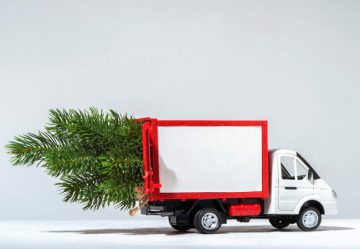
Bring the holiday joy to your household! Find out more about our Christmas tree delivery service here.
To keep your Christmas tree alive and fresh-looking for as long as possible, follow these steps:
How to care for a real Christmas tree to keep it fresh and green for as long as possible indoors.
Check that it’s fresh before you buy
The tree should have bright, shiny needles — not dry or dull. Any grey sections are a sign of dehydration. Some internal needle loss is normal as the tree prepares for winter, but the outer needles should not fall when you run your hand along a branch.
Store it correctly before setting up
If you won’t be setting up your tree on the same day, keep it in a cool, sheltered, dry place. Your tree may need around 4 litres of water on the first day, so use a large bucket and keep it topped up.
Choose the right position indoors
Keep it away from heat sources such as radiators and open fires. Whilst Nordmann Fir trees are known for their needle retention, it’s still best to keep any variety away from the central heating system.
Water it regularly
Regularly water your Christmas tree. A freshly cut tree can drink up to 1 litre of water per centimetre of trunk diameter in the first 24 hours, so don’t let the reservoir run dry. A well-watered tree is far less likely to become a fire hazard. For Norway Spruce in particular, regular watering can extend its life and improve needle retention considerably.
Keep on top of fallen needles
Even with the very best Christmas tree care, a few needles will fall. Vacuum them regularly. Of course, choosing the non-drop Nordmann Fir will ease that chore considerably.
When should you put up or take down a real Christmas tree?
There is no strict rule, only recommendations. Most people in the UK put their Christmas trees up around the 3rd of December. Other people like to put up their trees about 12–13 days before Christmas.
Frankly, it depends on your tree. If you have a Nordmann fir you can easily keep it up for the entire month of December. If you have a Norway Spruce, it would be best if you put it up as close to Christmas as possible.
According to the UK tradition, our Christmas decorations come down on the Twelfth Night, simply known as the 5th of January. This date is considered the last day of Christmas festivities and the eve of the Epiphany. It was once believed spirits lived inside decorative Christmas plants. Those spirits need to be released once the festivities are over.
It is sometimes debated which date is actually the Twelfth Night. Some people say it’s the 5th, others say it’s the 6th. The 6th of January is the day of Epiphany anyway, so one way or another, by then you should have gotten rid of your Christmas tree.
You can opt-in for Christmas tree disposal from us after the holidays, just make sure to contact us three days in advance so we can arrange the service.
A team of professionals will carry out the delivery and tree setup. Once the holidays have passed, you need not worry about what to do with your evergreen. The team can collect the tree and recycle it.
So there you have it, your questions concerning how long Christmas trees last have been answered. Whether it’s the type of tree, its qualities or when’s the best time to put it up, you can always refer to this guide.
***
Did you like it? Do you have other questions about Christmas trees unanswered? Drop a comment below or give us a shout on social media!