
Garden Advice
What is the best time to water your lawn in hot weather? 
A well-kept lawn is one of those things that just makes a home feel cared for. You notice it immediately when you pull up to a house. That lush, even green says something. But here’s the thing: most lawn problems aren’t caused by neglect. They’re caused by well-meaning homeowners doing the wrong thing at the wrong time. Lawn care mistakes are surprisingly easy to make, and some of them quietly cause damage over months before you even notice.
The gap between a thriving lawn and a patchy, yellowing one often comes down to a handful of habits. Get those habits right, and everything else tends to fall into place. Get them wrong, and you can spend a fortune fixing problems that didn’t need to happen.
The most common lawn care mistakes are overwatering or underwatering, mowing too short, ignoring soil compaction, and applying fertiliser at the wrong time of year. These errors are widespread because they often feel like the right thing to do. Too much care, badly timed, causes just as much damage as doing nothing at all.
Overwatering causes root rot and fungal problems. Underwatering leads to dry, brittle grass that’s easy to damage. Most UK lawns need far less water than people assume, especially in cooler months. Cutting the grass too low looks neat at first, but it removes the leaf area the grass needs to photosynthesise. Short grass burns in summer, struggles in shade, and lets weeds move in faster. Heavy foot traffic and garden furniture compress the soil over time. Compacted soil restricts root growth and reduces drainage, and you usually won’t notice the problem until it’s already doing real harm. As for fertiliser, applying a high-nitrogen spring feed in autumn pushes soft leafy growth right before cold sets in. That new growth is vulnerable, and it often dies off over winter. Timing genuinely matters here.
Yes, and often more than underwatering does. Grass roots need oxygen as well as moisture. When soil stays constantly wet, air pockets disappear, roots begin to suffocate, and fungal diseases take hold quickly. In the UK’s already damp climate, overwatering is one of the most common and least recognised lawn care mistakes.
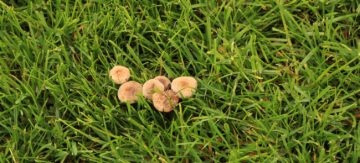
Fungal diseases like red thread, fusarium patch, and dollar spot thrive in wet, humid conditions. Once they establish, they spread fast. You’ll spot them as discoloured patches, pink or white threads on the grass blades, or irregular brown areas that don’t recover after watering. By the time those signs appear, the problem is already well underway.
Root rot is the other major risk. Roots that stay wet for too long start to decay. Shallow, weak root systems can’t anchor the grass properly or reach deeper moisture during dry spells. You end up with a lawn that’s both waterlogged and drought-sensitive at different times of year.
Here’s how to get the balance right:
A light browning during a summer dry spell is normal and doesn’t mean your lawn is dying. Most grass varieties recover well once rain returns, so resist the urge to overcompensate with heavy watering.
There’s a temptation to cut the grass as short as possible to save time between mowing sessions. It makes sense in theory. In practice, it’s one of the most damaging lawn care mistakes you can make. Grass needs its leaf surface to absorb sunlight. Cut it too short, and you’re removing the very thing that powers its growth.
The rule is simple: never cut more than a third of the grass blade in a single mow. Taking off more than that puts the plant under immediate stress. The grass diverts energy from root development just to recover, which weakens it steadily over time.
Height recommendations aren’t the same year-round. The grass behaves differently depending on temperature and growth rate, and your mowing should reflect that.
Blunt mower blades are another overlooked issue. They tear the grass rather than cutting it cleanly, leaving ragged edges that brown quickly and create entry points for disease. Sharpen blades at least once a season.

Neglecting seasonal adjustments is one of the most consistent lawn care mistakes homeowners make. A lawn has different needs in January than it does in June. Treating it the same way all year is a reliable route to problems: poor growth in spring, scorching in summer, waterlogging in autumn, and frost damage in winter.
Here’s a breakdown of what your lawn actually needs across the year:
| Season | Key Tasks | Things to Avoid |
| Spring | Scarify, overseed bare patches, apply spring fertiliser, begin regular mowing | Mowing when ground is still waterlogged; feeding too early before soil warms up |
| Summer | Water during dry spells, mow regularly at higher height, spot-treat weeds | Cutting too short; overwatering during cool or cloudy spells |
| Autumn | Aerate, apply autumn fertiliser (low nitrogen), remove leaves promptly, overseed thin areas | Using high-nitrogen spring feed; leaving wet leaves sitting on the lawn |
| Winter | Keep off frozen or waterlogged grass, clear debris, service mower | Walking on frosted grass; applying any fertiliser during dormancy |
One thing that catches people out: leaving fallen leaves on the lawn through autumn. It seems harmless, but a thick layer of wet leaves blocks light and traps moisture. You’ll end up with yellowing patches and a higher risk of fungal disease underneath. Rake or collect them regularly.
The UK’s weather has always been unpredictable. But the patterns are shifting in ways that genuinely affect how lawns should be managed. Warmer, wetter winters are becoming more common, as are prolonged summer dry spells. Traditional seasonal routines built around consistent spring rains and mild summers are starting to feel less reliable.
The practical response is to watch the actual weather rather than follow a fixed calendar. If February is mild and your lawn is growing, a very light trim at a high blade setting won’t hurt. If April is dry, don’t assume rain is coming. Adapt to what’s actually happening, not what the calendar says should be happening.
What are the biggest aeration and fertilisation mistakes homeowners make? The most damaging ones are aerating too rarely, fertilising with the wrong product for the season, and applying feed when the grass isn’t actively growing. Both tasks are highly effective when done right, and almost pointless when done at the wrong time.
Soil compaction quietly kills lawns from below. Aeration breaks it up, improves drainage, and lets oxygen reach the roots. Most UK lawns benefit from aeration once a year. Heavily used lawns may need it twice.
Fertiliser is not a quick fix. It works with the grass’s natural growth cycle. Feed at the wrong time and you’re either wasting money or actively causing harm.
As a general guide: use a balanced or nitrogen-rich fertiliser in spring to encourage growth, and switch to a phosphorus and potassium-based autumn feed to strengthen roots and improve winter hardiness. Always water in granular fertilisers after applying if rain isn’t expected within 24 hours.
Most lawn care mistakes leave visible signs once the damage has built up. The problem is that people often misread them and treat the symptoms rather than the cause. Knowing what you’re actually looking at makes a real difference.
Patches that don’t green up in spring, even after consistent watering and feeding, usually point to compaction or poor drainage underneath. The soil itself is the problem, not the grass. Persistent weeds in the same spots suggest the lawn is too thin or sparse to compete. Weeds don’t move into healthy, dense turf easily. They move into gaps. Red or pink threads appearing across the surface in damp conditions are a sign of red thread, a fungal disease made worse by underfeeding. It’s fixable, but it needs the right treatment at the right time, not just more water. Yellowing that doesn’t respond to watering in summer is often root-related. Either the roots are too shallow from overwatering, too weak from being cut too short, or the soil underneath is compacted and dry even when the surface looks damp.
Trying to rescue a visibly damaged lawn by applying multiple treatments at once can make things worse. If you’re not sure what the problem actually is, identify the root cause before applying anything.
By late spring, a lawn that’s recovering well should be showing strong, even growth. If yours is still thin, discoloured, or patchy in May or June, that’s a signal that one or more underlying issues haven’t been addressed. Go back to basics: check drainage, assess compaction, review your watering and mowing habits, and look at when you last fed. The answer is usually in one of those four areas.
Get a professional lawn care quote and keep your grass in top shape all year.

Avoiding lawn care mistakes isn’t about following a rigid rulebook. It’s about understanding what your lawn actually needs and when. Water thoughtfully, mow at the right height, feed for the right season, and give the soil the attention it needs. Do those things consistently, and most common problems simply don’t develop in the first place.
Lawns are resilient. They recover well when you stop making the mistakes and start doing the right things. A shift in habits goes a long way, and the results show up quickly when you get it right. Whether you take on the work yourself or bring in professional lawn care support for the tasks you’d rather outsource, the key is consistency.




The only home improvement newsletter you will ever need!
We will never spam you. Pinky promise!
For more information, check out our privacy policy.