

Cleaning Guides
5 Homemade Window Cleaner Recipes for Streakless Results 
Modern-day cleaning products are as efficient as they are dangerous. That sounds propostorous, but research says otherwise. According to our own government, exposure to cleaning products and chronic obstructive pulmonary disease is the third of 6 high-priority occupational exposure-disease combinations.
According to the University of York, green cleaners can emit high levels of volatile organic compounds (VOCs) and secondary pollutants. And according to a study on the Wiley Online Library persistent weekly use of multiple disinfectants is associated with a 1.68 times higher risk of asthma (OR = 1.68).
There’s plenty more research you can check for yourself, but you get the picture. For all their bells and whistles, cleaning products are actually dangerous if you use them with no protection, or heaven forbid, mix them.
In this post, you will become familiar with the most dangerous cleaning products, the risks they pose and safer alternatives. Let’s start with the…
Let’s start with everybody’s favourite but also worst cleaning product when it comes to our health.
The sodium hypochlorite in bleach is what gives it its sharp smell and strong effect. Unfortunately, it is also what makes it corrosive. Get it on your hands, and you may feel a sting or dryness. Breathe in too much and your chest may feel tight.
The real danger, however, starts when you mix it. Bleach mixed with ammonia creates chloramine vapours. On the other hand, if you mix it with acids, it releases chlorine gas. You want neither of them near your nose.
These look harmless, especially compared to bleach, but many of them contain ammonia. That is what helps cut through grease and leave a streak-free finish, but it can irritate your skin and your airways.
Next time you use it in a tiny, enclosed area, pay attention to whether the potent odour makes your eyes water. You can also have a sore throat. It may cause breathing difficulties or coughing in certain individuals.
Again, the risk goes up if you mix it with other cleaners.
Drain and oven cleaners sit right at the top of the most dangerous cleaning products list and for good reason.
Drain cleaners often contain very strong chemicals like sodium hydroxide or potassium hydroxide. Some types also use sulphuric acid. These substances create heat to break down all the impurities in your drains. That is how they clear blockages so fast. The problem is, they do not “know” what to stop at. The same reaction that eats through a clog can burn skin, damage eyes, and even weaken pipes if used too often.
Oven cleaners work similarly. The sodium hydroxide in them breaks down baked-on grease and turns it into a soap-like substance that you wipe away. They also include solvents and surfactants to lift dirt off surfaces. They cling to oven walls on purpose. That gives the chemicals more time to work, but it also means longer exposure to fumes while you clean.
There is also the environmental impact which nobody talks about, but we will get to that later.
Fewer products mean less clutter, right? Here is the trade-off. You often get not one or two, but a whole cocktail of toxic cleaning products in a single bottle. Let’s elaborate.
Inside, there’s a bit of everything. Surfactants to lift grease. Solvents to melt stubborn grime. Preservatives to stop the bottle going off. Then fragrance to make it smell like a lemon orchard instead of a chemistry set.
On their own, each one has a job. Fair enough.
The problem starts when they all show up at once. Surfactants like sodium lauryl sulphate can leave your skin a bit dry or itchy. Solvents can give off that sharp, slightly sweet chemical smell, you know the one that hangs in the room after you finish. Preservatives can quietly irritate your skin hours later.
Put it all together in a small bathroom with the door shut, no window open, you’ve basically made a low-level fog. Not enough to knock you over. Enough to build up while you scrub the sink and wonder why your head feels a bit fuzzy after.
That nice scent often comes from synthetic fragrances and chemicals like phthalates. Quite the irony, eh? A product that makes air smell fresh actually fills it with VOCs (volatile organic compounds).
VOCs include chemicals such as limonene, formaldehyde, and acetaldehyde. Even at low levels, VOCs can irritate the eyes, nose, and throat. In small or poorly ventilated rooms, the concentration builds up quickly and makes breathing uncomfortable. Regular exposure can also trigger allergies and asthma attacks, especially in sensitive people, children, and pets.
Disinfectant sprays are effective at killing bacteria and viruses, but that strength comes with risks. These products contain quaternary ammonium compounds (quats), bleach derivatives, or alcohol-based chemicals.
Breathing in the fumes may cause coughing, wheezing, or throat irritation. People with asthma or other lung conditions are especially at risk. Over time, repeated exposure to strong disinfectants may contribute to longer-term respiratory problems.

They seem less harmful, but many contain petroleum distillates and formaldehyde. Petroleum distillates act as solvents and give wood that shiny, smooth finish. Formaldehyde, on the other hand, is used as a preservative in some formulas.
The problem is how easily these chemicals become airborne. Spraying or rubbing polish releases tiny particles and fumes you can inhale. In poorly ventilated spaces, this can irritate your lungs, throat, and eyes. Repeated exposure may worsen breathing problems, especially for people with asthma or other respiratory conditions.
Some products also include strong fragrances, which can hide additional chemicals and contribute to indoor air pollution. Pets are at risk too – cats and dogs may breathe in these fumes or come into contact with polished surfaces.
You don’t need to drink a bottle of cleaner for it to affect you. Just using it the normal way does the job. It’s not dramatic, but rather quiet, slow, and easy to miss.
Take the “clean” smell for example. It’s all fumes from sprays, disinfectants and polishes. If you breathe them long enough, you might notice your throat feeling scratchy or your chest becoming tight. Some people can even start to cough. Do we need to mention people with asthma?
But it’s always your skin that deals with harmful cleaning products first. Strong cleaners don’t always burn straight away. Sometimes your hands just become tight and dry after cleaning. Other times, oven cleaners, drain cleaners, even some multi-purpose sprays can sting or leave your skin feeling raw if they sit too long. It adds up, if you clean without gloves.
Pregnancy should also be mentioned, since many people ask if cleaning products are dangerous when pregnant. Even low-level exposure to hormone-disrupting chemicals can throw your organism off balance. Fumes can irritate your lungs, making it harder for your body to get the oxygen it needs, and some of the chemicals can reach the developing baby, affecting growth or development in ways you might not notice right away.
Now let’s zoom out to the environmental impact. What goes down your drain doesn’t just disappear. After you rinse everything away, those chemicals head straight into the water system. Treatment plants catch some of it, but not all. The leftovers can end up in rivers and seas, where they cause changes in water chemistry and stress sea wildlife.
It’s not just wildlife either. Pets also get their fair share of toxic chemicals. Cats, especially, because they groom themselves and pick up residues from floors and surfaces. That’s where concerns about toxic cleaning products for cats and harmful cleaning products for dogs come from and honestly, they’re valid.
Always take a minute to check the label. Many people assume that if it is sold in a shop, it must be safe. That is not always true, sadly.
That’s why you need to educate yourself on what chemicals to avoid in cleaning products. In the UK, labelling rules are strict but not perfect. Manufacturers do not have to list every single chemical, especially if it is part of a fragrance mix.
That means a product can carry hidden risks even if the label looks “normal.” Still, it’s important to know as much as you can about the dangerous chemicals in cleaning products like:
There is also something to be said about some words on bottles. They do sound safe but can hide dangerous chemicals:
Believe it or not, there are some non-hazardous cleaning products on the market and you have probably already heard or know of them.

The truth? Green products do have benefits. Many are biodegradable, less harsh on surfaces, and gentler on the environment. But here is the catch: not all “eco” products are fully non-toxic. Some still include fragrances, preservatives, or other chemicals that can irritate skin, lungs, or pets.
The key is to check the label for:
A few simple habits can cut your exposure to toxic cleaning products and make your home safer for you, your pets, and your family.
Mixing cleaners may seem like it will make them work better, but it does not. In fact, it can turn a normal job into a risky one. You already know about bleach plus ammonia and why you should never mix them.
The scary part is, sometimes you may not even realise you are mixing them. Some products already contain hidden ingredients like ammonia or acids and you would never guess.
That’s why it’s best to stick to one product at a time. Rinse surfaces if you plan to use something else after. Simple, but it keeps things safe.
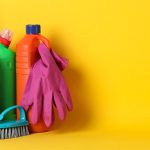
Open windows or doors while you clean. It sounds basic, but it makes a big difference. Fresh air helps move fumes out instead of letting them build up around you.
Even mild cleaners can feel strong in a small, closed space. If you ever feel light-headed or get a headache while cleaning, poor ventilation could be a contributor, so open a window or a door to remedy that.
Gloves are one of those things people skip. Big mistake.
They protect your skin from burns, dryness, and irritation. Strong products like drain cleaners, bleach, or oven sprays are definitely safer to handle with gloves. Even milder cleaners can cause problems with regular use if they come into contact with your skin.
A simple pair of gloves saves your hands from a lot of wear and tear. Your future self will thank you.

It is easy to go overboard with disinfectants. Spray the kitchen. Spray the bathroom. Spray everything “just in case.”
The truth is, you do not need that much. In fact, overuse can irritate your lungs and skin, and it adds to indoor air pollution. It can also expose pets to more chemicals than needed.
Use disinfectants where they matter most, like for floors, bins, toilets, or after handling raw food. For everyday cleaning, milder options usually do the job just fine.
Aerosol sprays might feel convenient, but they send fine particles straight into the air. Those particles are easy to breathe in, and they can linger longer than you think.
Switch to liquid sprays, wipes, or diluted solutions instead. You still get a clean home, just without filling the air with extra chemicals. Your lungs will notice the difference.
Instead, schedule your regular cleaning today.









The only home improvement newsletter you will ever need!
We will never spam you. Pinky promise!
For more information, check out our privacy policy.