Mould is one of the worst disasters that can happen to your carpet. It is not only unpleasant and smelly, but it can also be very harmful to your health, especially if you are susceptible to respiratory diseases. In this article, we will explain to you how to remove mould from carpet and how to prevent it in the first place.
So, if you:
Have noticed some mouldy spots on your carpet;
Want to know what causes mould on carpet;
Are looking for a way to get rid of it;
Want to prevent mould growth and keep yourself and your family healthy.
Then go ahead and read this post because it is just for you!
What causes mould on carpets?
Mould is a notorious fungus that eats into wet surfaces. It can be found anywhere, even inside your home. As mould needs moisture to develop, the most common places where it can be found are damp, poorly ventilated areas. This fungus is also a common problem for places that have been closed up for a long period of time.
There are many factors that cause mouldy carpets. The main ones are humidity, leaks and condensation. As carpets can absorb and retain moisture for a very long time, they create perfect conditions for mould to grow and develop. That’s why bathrooms and kitchens are the most common “breeding grounds” for mould. This fungus is also a common problem for places that have been closed up for a long period of time.
Usually, mould tends to appear in summer and autumn, when the warmth and the humidity of the weather are high. Some of the most common signs of carpet mould are:
Damp, musty odour – this is the first indicator that mould is growing on your carpet. The musty odour is a sign of poor air quality in your home, and to prevent the situation from worsening, you should check the carpet for mould as soon as you sense such a damp smell.
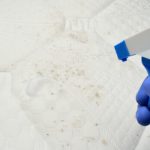
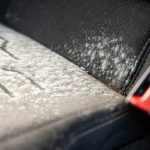
Discolouration – due to the carpet fungus, yellow, brown or black spots may appear on the carpet. Remember to check the area underneath the carpet, as it can discolour before any visible signs appear on the surface of the carpet.
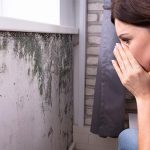
Allergies – carpet fungus can cause respiratory problems, allergies, and other health issues. If you or someone else in your household experiences frequent allergic reactions or respiratory problems, this may be a sign of mildew or mould in your carpet.
The colour of the mildew depends on the conditions. Whether it’s green, brown or white, you need to act fast and get rid of it, in order to keep your carpet and your family members in good health.
You’ll need: dishwashing detergent, water, a stiff brush, bleach, a spray bottle, a towel
Create a cleaning solution. Mix dishwashing liquid and water to perform base cleaning.
Scrub the area with a brush. Don’t scrub too harshly to avoid damaging the carpet.
Create a solution. Mix half a cup of household bleach with 2 litres of lukewarm water. Note: We recommend that you use colour-safe bleach to avoid damaging the colour of your carpet.
Apply. Pour the solution into a spray bottle and apply it directly to the mouldy area.
Leave it. Let it sit for 15 minutes.
Dry. Use a dry white towel and pat the area. Dry the carpet as much as you can to prevent mould regrowth.
You can use a blow dryer to dry the wet spot. Just make sure that the airflow is not too hot.
Removing mould from carpet with commercial cleaner
Apply anti-mould or antifungal spray to the affected area. Note: Antifungal products can discolour or damage your carpet.
Follow the instructions on the label. Products vary, that’s why you need to carefully read the instructions on the back of the bottle.
Apply a carpet cleaner. Many carpet cleaning products contain deodorises that can solve the odour problem and even rid you of the fungus itself.
Follow the instructions. Again, it is very important to read the label before proceeding.
Apply chlorine dioxide. Find a mould removal detergent that contains chlorine dioxide. Spray directly on the mouldy area. Note: This chemical can damage the colour and the fibre of your carpet.
Wet vacuum. Depending on the product type, you may need a wet vacuum to remove the residue after use.
Be very careful while using chlorine dioxide products. Always use in a well-ventilated area. Don’t forget to protect your eyes and lungs. In case you feel short of breath or start coughing, get out of the room immediately.
The best method of dealing with carpet mould is to prevent its growth in the first place. Here are a couple of “rules” that you need to follow in order to avoid encouraging mould growth:
Reduce indoor humidity. As we have already mentioned, humidity is one of the main factors that cause mould on carpets. A dehumidifier could be a good investment.
Increase ventilation. Aerate the room by opening the windows or turning on the fan on a daily basis. If you are dealing with a mouldy carpet in your bathroom, make sure your extractor fan works well, and it’s cleaned properly.
Vacuum regularly. Use a vacuum cleaner to regularly clean your carpet. This way, you will not need to perform a deep clean with liquid detergents that can cause mould.
Never allow standing water. Water is mould’s best friend. If standing water appears due to a leak, for example, find the leaking pipe and fix it. Make sure to clean and dry the area as soon as possible.
Professional carpet cleaning for removing the mould from your carpets
Some of the methods above involve the use of harmful chemicals, while others require more specific products and tools. That’s why we recommend you make the wise choice by hiring professional carpet cleaners by Fantastic Services. Our trained and fully-equipped experts will identify the problem and then choose the most suitable method to remove the mould from your carpet.
Do not risk your health and your carpet’s fibre and colour but book a professional carpet cleaning service now! And if any of your upholstery items have also been exposed to humidity and started developing mould, you might find our tips on how to remove mould from upholstery furniture useful.
We are now offering a new service – an antiviral sanitisation of your carpets and upholstery. It’s performed with an EN1276 CERTIFIED detergent, meaning it can eliminate 99.99% of germs within five minutes of application.
Saw mouldy spots on your carpet?
Let the expert handle this for you. Enter your postcode to get started: