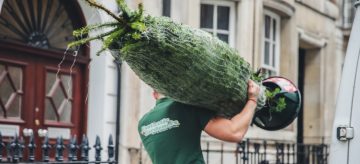
The time required for a Christmas tree to grow depends on the species and environmental conditions. Generally, it can take anywhere from 8 to 12 years for a Christmas tree to reach the ideal height for harvesting, which is around 6 to 7 feet tall.
Add to Preferred Sources
With millions of trees sold in the UK every year, there’s a steady market for growers who produce a quality crop. This guide covers how long different species take to reach harvest height and what conditions they need to get there.
TL;DR
Most Christmas trees take 8 to 12 years to reach the typical harvest height of 6 to 7 feet, depending on species and growing conditions.
Norway Spruce is the fastest-maturing commonly grown species, taking roughly 4 to 6 years from a 3-year-old sapling.
Nordmann Fir grows more slowly (around 25 to 30 cm per year in height) but is increasingly preferred because it holds its needles far longer indoors.
Noble Fir grows even more slowly than Nordmann Fir and suits buyers who prefer a blue-green appearance and are willing to pay a premium.
Christmas trees are typically planted as 3 or 4-year-old saplings, not from seed, to reduce early-years investment risk.
Shearing from year three or four onwards shapes the tree commercially and encourages denser growth.
Weed control and protection from rabbits and aphids are the most common practical challenges in UK Christmas tree cultivation.
What is the fastest-growing Christmas tree species?
Of the species commonly grown in the UK, Norway Spruce is the fastest to reach harvest height, typically maturing in 7 to 8 years. Noble Fir is noticeably slower than both Norway Spruce and Nordmann Fir, and suits a niche premium market rather than volume production.
The fastest-growing Christmas tree species in the UK is the Norway Spruce. It can reach a desirable height of 6 to 7 feet in around 7 to 8 years from planting. Both Norway Spruce and Nordmann Fir are popular commercial choices, though Nordmann Fir takes considerably longer to mature.
The short answer: Norway Spruce takes as little as 4 to 6 years from a 3-year-old sapling. Nordmann Fir typically takes 10 to 12 years from the same starting point. Noble Fir takes longer still. Which species you choose is the single biggest factor in how long you’ll wait before your first harvest.
There are several different types of Christmas trees grown in the UK, and how fast a Christmas tree grows depends heavily on which variety you choose. Soil quality, temperature, rainfall, and pest and weed control all influence tree development too.
How long to grow a Christmas tree before marketing also depends on how large a tree you want to produce. The larger the tree, the better the profit margin tends to be, but you wait longer to recover your investment. It’s also worth remembering that since UK homes tend to be smaller these days, the larger the tree, the smaller the potential market for it.
Two of the most popular Christmas tree species in the UK are Norway Spruce and Nordmann Fir, with Noble Fir occupying a smaller but growing share of the market.
Norway Spruce – The most traditional European Christmas tree and still the most widely planted. Depending on the size of the tree you’re aiming for, and assuming that you’re planting 3-year-old trees, the growing cycle of Norway Spruce could be as short as 4 to 6 years. While Norway Spruce does have a lovely scent, it’s very prone to needle loss once moved indoors. If you grew up with trees that were decorated a day or two before Christmas but were bare of greenery by December 31st, the chances are your family bought Norway Spruce.
Nordmann Fir – This species is native to Turkey, the Russian Caucasus, and Georgia. Nordmann Fir growth rate is slower than that of Norway Spruce, around 25 to 30 centimetres in height and 15 centimetres in width per year. From a 3-year-old sapling, expect around 10 to 12 years to reach a marketable 6 to 7 feet. Nordmann Fir is also a more expensive tree; nevertheless, it’s become an increasingly popular choice mainly because it’s far less susceptible to needle drop than the traditional spruce.
Noble Fir – Also a popular choice for Christmas trees, but even slower to grow than Nordmann Fir. It suits a niche premium market rather than high-volume production. Its blue-green foliage appeals to customers looking for something a little different, and growers who commit to it can often command a higher price per tree as a result.
Species
Years to harvest (from 3yr sapling)
Annual growth rate
Needle retention
Notes
Norway Spruce
4 to 6 years
Fast
Poor indoors
Traditional scented tree; most widely planted in UK
Nordmann Fir
10 to 12 years
25 to 30 cm per year in height
Excellent indoors
Increasingly popular; commands a higher retail price
Now let’s look at the most favourable planting conditions and what mistakes to avoid when growing healthy trees.
The right site
Level ground is preferred, both for the tree’s benefit and for ease of harvesting. Avoid hollows where frost can gather. Conifers are hardy, but a hard frost can damage young trees. Accessibility matters too: an easy-to-reach site will make harvesting and transport much simpler to arrange.
There’s a balance to be drawn, however. Christmas tree theft is sadly big business, and if your site is both easily accessible and highly visible, you may need to take security measures to ensure that an opportunistic criminal doesn’t reap the benefits of your work.
Spacing
Spruce trees – Normal spacing is between 1 and 1.2 metres apart for spruce species. At 1-metre spacing, you’ll achieve 10,000 trees per hectare (roughly 4,000 per acre).
Nordmann Fir – This species is generally planted at 1.2-metre intervals, the same distance appropriate for Noble Fir. A hectare of land planted at 1.2 metres will yield around 6,900 trees (roughly 2,800 per acre).
Suitable soil and proper planting
It’s possible to grow your trees from seed, but particularly in the early years of a new enterprise, it’s more usual to buy in and grow on saplings. In the case of Norway Spruce, it’s most common to buy trees that are 3 or 4 years old. In more exposed sites, 3-year-old trees are the better option.
Trees are normally supplied with the roots bagged to protect them. They can be stored in the bags for up to 4 days, provided the roots are not allowed to dry out. Most species tolerate a range of soils, but extremely acid, chalky, clay, or sandy soils aren’t ideal.
When planting, ensure the trees are vertical and placed at the correct depth, with the root collar at ground level and well-heeled in. Plant during the dormant season, from November to April.
Conifer species don’t need especially rich soil, so compost isn’t usually required. If the colour is poor, an application of fertiliser prior to harvesting will correct this and make the trees more saleable.
Shearing
Shearing is essentially pruning to give the tree a better shape. Trees are usually sheared from the third or fourth year onwards by cutting back part of the leading shoot and lateral branches. This stimulates dormant buds further down the stems, resulting in bushier growth. Timing depends on the species: Norway Spruce, for example, is generally sheared between September and March.
Never remove the central leader (the topmost vertical shoot) when shearing. Cutting it by mistake permanently affects the tree’s shape and reduces its saleability. If in doubt, take less off rather than more.
Pest protection
Christmas trees are vulnerable to attack from pests, large and small.
Rabbits – In most parts of the country, rabbit-proof fencing is a must if you don’t want these animals to cause widespread damage to your young trees.
Deer – Deer are not a countrywide problem in quite the same way that rabbits are, but if you’re planting in an area where there are deer, you’ll need to upgrade your fencing to something that will also keep them out.
Insects – Aphids are the insects most likely to attack Christmas trees. Unless you’re able to use a biological control method, it’s likely that you’ll need to spray against aphids several times during the growing season.
Weed control
Your trees will get off to a stronger start if the site you plant them on is weed-free. One way of achieving this is to pre-spray with a suitable herbicide in late summer or early autumn prior to planting. Weed control will be required throughout the growing cycle. Younger trees are of course more vulnerable.
Grasses are a particular hazard and can easily smother the lower branches of Christmas trees. The choked foliage will turn brown, rendering it very unattractive and vastly reducing the saleability of your crop. Certain herbicides can be used when the trees are dormant. A half-strength application may be advisable, and if you’re in any doubt, seek specialist advice before spraying.
Order 2-3ft classic pot-grown Christmas trees quickly online!
Spacing determines your yield per acre. Norway Spruce planted at 1-metre intervals produces around 4,000 trees per acre. Nordmann Fir and Noble Fir, planted at 1.2-metre intervals, yield roughly 2,800 trees per acre. Bear in mind that not every tree will reach a marketable standard, so allow for some attrition when calculating expected returns.
Can I grow a Christmas tree in my garden?
Yes, though most garden-grown trees are for personal use rather than sale. Norway Spruce and Nordmann Fir can both be grown in garden conditions, provided the soil is not extremely acid, chalky, clay, or sandy. Space is the main constraint: even a modest 6-foot tree needs several years of uninterrupted growth and enough room around it to develop properly. Container-growing is possible but slows growth further.
Do Christmas trees need full sun to grow?
Most commercially grown Christmas tree species prefer an open, well-lit position and will grow best with good light exposure. Deep shade significantly slows growth and can produce thin, poorly shaped trees. Full sun is not strictly required, but avoid planting in spots that receive less than a few hours of direct light each day. Frost pockets and exposed hilltops should also be avoided, particularly for younger trees in their first few growing seasons.
Conclusion
Growing Christmas trees is a genuine medium- to long-term commitment. The species you choose shapes almost everything: how quickly you see a return, how much you can charge, and how your crop performs once it’s in a customer’s home. Norway Spruce gets you to market fastest, but Nordmann Fir’s needle retention makes it the tree more buyers actively seek out. Get the species decision right first, then focus on site, spacing, and the steady discipline of weed and pest control throughout the growing cycle.