
Garden Advice
How to Kill a Tree 
You wouldn’t think gardening was risky, right? Turns out, every year thousands of people end up in the emergency room with cuts, scrapes, or worse – all thanks to the tools they thought were harmless. Ever nicked yourself on a pruner and laughed it off? Or tripped over a rake in the shed and nearly broke your toe? It’s funny in hindsight, but boy, is it painful in the moment.
In this post, we’re taking a closer look at several gardening tools that could be more dangerous than you think. We’ll break down how they can hurt you, share some real-life “oops” moments, and give you the safety tips you need to keep your fingers, toes, and dignity intact while you dig, trim, and weed.

Chainsaws look cool, feel powerful, but they’re basically tiny, motorised guillotines. Kickback can snap that chain right back at you. One wrong move and you’re staring at deep cuts or lost fingers.
Instead of calling an expert tree surgeon, most people grab them for big tree jobs or heavy pruning. Don’t let the “I’ve got this” attitude fool you. Safety isn’t optional here. You need chainsaw trousers, thick gloves, a helmet with a visor, and solid boots.
When it comes to how to use a chainsaw, remember to stand firm, grip it right, and never, ever work alone. Even a quick job can turn ugly in seconds.
In the UK, a lot of homeowners use chainsaws without any certification, thinking it’s just “cutting a bit of wood in the garden.” That’s where most accidents happen, actually. Take it seriously, because this is one very dangerous garden tool. It’s no wonder that you see it in all kinds of horror movies.

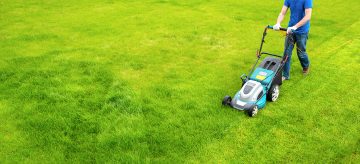
Lawn mowers might seem tame in comparison to chainsaws, but they’re just as dangerous.
Their blades spin so fast that they can give your limbs deep cuts, broken bones, or worse. Another thing the fast-spinning blades can do is launch tiny stones or sticks into the air, if those stones and sticks find themselves between the rotating blades. You don’t want to get hit by one of these, trust us.
It’s not only the sharp blades that can send you to the hospital. You can easily slip on wet grass while you’re pushing the heavy machine. That’s a classic way to twist your ankle. The risks go up on slopes, rough ground, or when you’re rushing to finish before tea time.
Safety’s not a joke here either. Before you even fire up this dangerous gardening machine, you need to walk the yard and dispose of any stones, sticks, toys, or whatever other debris you spot. Professional gardeners who do lawn mowing do that too. The point is to remove anything that could become a projectile heading for your windows of people nearby.
Never, ever put your hands or feet near the blades while they’re spinning. If something jams, switch the mower off and pull the plug (or disconnect the spark plug) before you touch anything. According to the BBC, in the UK, around 6,500 people get hurt by hand-pushed or ride-on lawnmowers every year, so don’t be one of them.
Wear sturdy shoes and gloves, and don’t mow when the grass is soaking wet. Stay sharp, no pun intended, and treat this dangerous gardening tool with the respect it deserves.


Manual hedge trimmers don’t look that scary and that’s the problem. Their blades are sharp, move fast, and they don’t care if it’s a branch or your fingers in the way. You need to be extra careful.
Electric trimmers, on the other hand, not only look, but are quite dangerous. Apart from the standard gruesome scenario where you unintentionally cut off a limb, you can also get an electric shock. Yes, that happens to people who have stretched the power cord too far.
Keep it simple. Wear gloves and eye protection. Check where the cable is at all times if you’re using an electric trimmer. Don’t cut above shoulder height; you lose control faster than you think. Take your time, keep a steady grip, and switch it off before you clear jammed branches.
Or call a gardener to provide you with a hedge trimming service. That will definitely save you from the risk and potential troubles.


Strimmers, like their mower cousins, are very dangerous because they also kick up stones and bits of gravel at speed. They can also get away from you. For example, you hit a thick patch or a hidden rock and the head can jerk hard. You lose your grip for one second and the next you’re swinging a fast-spinning line way too close to your body.
Most people use strimmers for edging lawns, cutting long grass, or clearing areas the mower can’t reach. That’s pretty standard stuff. But the risks go up when the ground’s messy, overgrown, or full of hidden debris.
With all that said, you need to wear eye protection, long trousers and sturdy boots. Take it slow, keep a firm grip, and watch where the head is at all times.

These are the tools most people trust. They’re small, simple, and feel easy to control and that’s why you underestimate them.
Pruners and shears can slice through stems and fingers without much effort. It only takes a quick slip, or cutting at the wrong angle to slice your finger whilst pruning.
Axes are a different story. If you miss your target, or hit the wood at a bad angle, that blade can glance off straight toward your leg or foot. Try to make controlled cuts and don’t rush it.
As far as protection goes, wear gloves for grip and safety. Make sure you’ve got a stable stance and a clear space around you. No one should be standing close, and there should be no distractions.
Important: Blunt tools are just as risky. They slip more, and that’s when accidents happen. Keep blades sharp all the time.

Even ladders, you ask yourself? They’re right up there with the most dangerous gardening tools. One wobble, one missed step, and you’re on the ground. Falls are the big risk here. Especially when you’re reaching too far, working on uneven soil, or trying to “just quickly” trim that last branch.
You can use them for hedge trimming, tree work, or cleaning gutters, but the risk shoots up when the ladder isn’t stable or when you’re rushing.
Always set it on firm, level ground and don’t lean out too far. If you can’t reach, climb down and move it. It’s slower, but it beats a trip to A&E.

Garden hoes seem harmless, but use them wrong and you’ll feel it in your back fast. Long sessions with poor posture can leave you stiff and sore. Then there’s the risk of swinging too close to your feet, which can result in a nasty foot injury.
Keep your back straight and take breaks. Wear sturdy boots to protect your feet and use slow, controlled movements. They beat wild swings every time.

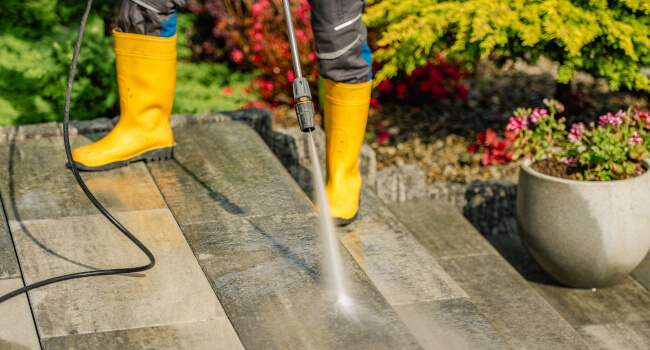
Pressure washers are easily among the most dangerous pieces of garden equipment. That jet of water can actually cut skin.
They’re great for cleaning patios, driveways, and garden furniture, but the danger goes up if you use them on ladders or on slippery surfaces. One slip and that jet can hit you or someone nearby.
Keep a safe distance from surfaces and never ever point it at people, pets, or yourself. Wear proper footwear so you don’t slip. And never use it while standing on a ladder.

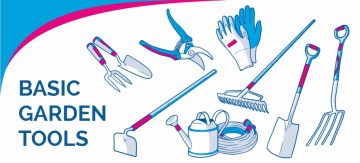
Trowels are small and don’t have any spinning blades. So, why are they considered a dangerous gardening tool? Well, they are pretty sharp. So sharp, even, that if you get distracted and slip or grab them the wrong way, you can get a puncture wound. Your hands are always near the blade when you do garden work, so you’re always one distraction away from a wound.
Keep a firm grip and don’t leave it lying blade-up in the soil. Wear gloves for a bit of protection and slow down when you’re working in tight spaces. It only takes a second to jab yourself.
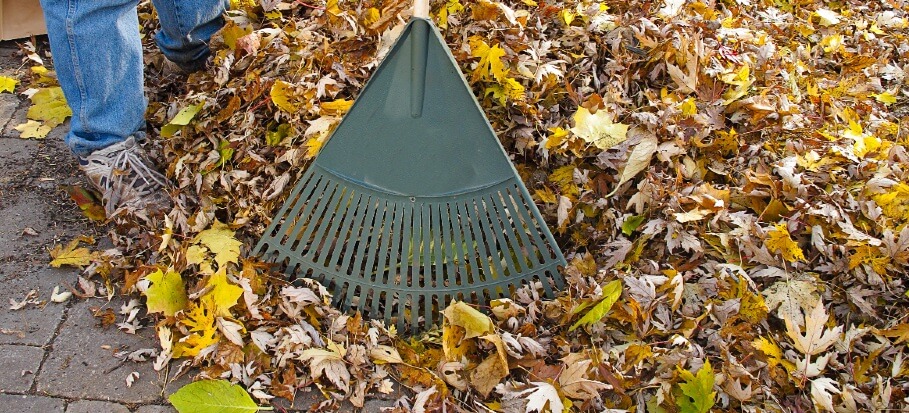
Rakes and forks are everywhere, and they’re easy to ignore until you step on them.
Rakes can snap up and hit you in the face as if you were a real-life cartoon character. Forks are worse. Those sharp prongs can go straight into a foot if you’re not careful. Both can also cause injuries if you swing them without watching your space.
Always store them with the tines facing down and wear sturdy boots when you use them. And always be aware of where you step.

It’s not just about the tool itself, although you already have plenty of examples of harmful tools. It usually comes down to a few simple things.
First, power vs manual tools. A pair of hand shears can cut you, sure, but a powered tool with speed and force behind it? That’s a different beast. More power means less time to react when something goes wrong.
Then you’ve got sharp blades, rotating parts, and high torque. That’s where the real danger sits. Fast-spinning parts don’t stop quickly. High torque can yank a tool out of your hands. That’s why many of the most dangerous gardening tools share these features.
Lack of training is another big one. A lot of dangerous garden tools end up in the hands of people who’ve never been shown how to use them properly. Combine guesswork with impatience, and things go wrong fast.
Weather plays a part, too. Wet grass, muddy patches and slippery paving make tools harder to control. You can easily lose your footing, your grip, and get seriously injured.
And then there’s fatigue. When you’re tired, you’re either sloppy or overconfident. That’s when accidents happen.
It’s ironic that gardening, an activity considered relaxing and good for your health, can also be this dangerous, but the numbers speak for themselves.
According to Garden Centre Retail, over a third of all home accidents happen in the garden. Every year, around 6,500 UK residents get injuries from lawnmowers. On the other hand, ladders are responsible for 21% of injuries because people often put them on the grass, which can be quite uneven.
Figures from the Royal College of Surgeons of England show there were over 25,700 hospital admissions for gardening and DIY accidents in England between 2014 and 2017 with roughly 8,500 admissions per year. Over three years, 23,258 people ended up in hospital with injuries from hand tools, lawn mowers, or powered equipment.
So you see, the examples of harmful tools are not always the big machines. It’s the everyday stuff you’ve used a hundred times without thinking.
And here’s something most people don’t even consider: why is it dangerous to leave garden tools outside at night? Night air brings moisture, which, in time, leads to rust. Rust weakens the metal and roughens the blade, so it stops cutting clean and starts slipping instead. Handles can loosen. Wooden parts can swell or crack. Electrical tools can get damp inside, which is even worse.

Fix these basics and you can avoid most problems mentioned so far.
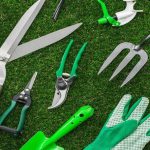
Sometimes, no matter how handy you are, it’s smarter to call in the pros. Think about tree cutting or tackling large hedges, for example. A few branches might not seem scary, but the bigger the plant, the higher the risk. Professionals come with the right tools, know the angles, and can do it without turning it into a disaster.
Then there’s anything that needs chainsaws or heavy machinery. Sure, you could rent one, but one slip is all it takes. Experts, on the other hand, use these tools all the time and know the safest way to handle them.
Working at height is another classic danger. Ladders wobble, branches break, and the ground isn’t always levelled. A professional knows how to position themselves and their tools to avoid falls.
Hiring a gardener isn’t just about convenience. It’s about keeping yourself safe and avoiding the kind of accidents you’ve read about earlier in this post.
No worries. Schedule an appointment easily online!





The only home improvement newsletter you will ever need!
We will never spam you. Pinky promise!
For more information, check out our privacy policy.