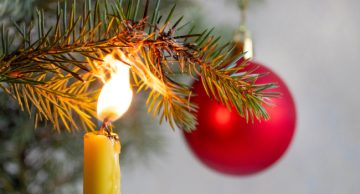
Nothing beats the smell of fresh pine needles from a real Christmas tree. If you are thinking about buying a real Christmas tree this year, this guide covers everything you need to know: which species to choose, how to check for freshness, what to expect on price, and how to keep it looking its best right through the holidays.
TL;DR
- The Nordmann Fir is the most popular real Christmas tree in the UK: non-drop, symmetrical, and widely available.
- Measure your space (height, width, and depth) before you buy, and keep the tree away from radiators and fireplaces.
- The best time to buy is the first or second week of December. A healthy cut tree lasts 4 to 6 weeks indoors.
- Check freshness at the lot: run a hand along a branch and very few needles should fall. The trunk base should be reasonably straight.
- Real trees need water daily. A freshly cut tree can drink up to a litre a day in the first week.
- After Christmas, trees can be collected by your council, chipped at a garden centre, or replanted if pot-grown.
- You can buy online and have the tree delivered and installed, which is useful if transport is an issue.
Why buy a real Christmas tree?
While many families choose an artificial tree, there are many reasons why buying a real Christmas tree is still worth it. Yes, keeping a real Christmas tree fresh requires a bit more care, but the benefits are clear. And yes, you need to spend some time watering them and cleaning pine needles off the floor.
However, many love the joy of picking out the perfect live conifer. The smell and look of natural Christmas trees can’t compare to an artificial one, no matter how realistic some modern models can be.
Real Christmas trees have many environmental advantages that artificial ones just cannot equal. Growing on committed farms, these trees are part of a sustainable cycle: every tree removed guarantees no net deforestation since fresh seedlings are replaced.
Moreover, as they develop, actual trees take up carbon dioxide, thus lowering greenhouse gas emissions. Once your tree is no longer in use, it can be recycled into mulch, lowering waste even more. Unlike fake trees that wind up in landfills and take generations to decay, real trees naturally decompose even after being disposed of.
If you want to know more, in this post we point out the pros and cons of real and artificial Christmas trees.
What to do before buying a Christmas tree?
Buying a live Christmas tree requires some preparation. You wouldn’t want to spend all that time looking for the perfect tree, only to find out it’s too big for your living room, right? So, here is what to do before beginning your journey.
Pick your spot
It’s important to know where your tree will go once you bring it in. You can place it anywhere you like: next to your telly, near a window, or in a well-lit corner.
Just remember: never put your real Christmas tree near heat sources, such as radiators or a fireplace. The heat will dry out your tree, causing the needles to brown and start falling off. High-traffic areas, such as doorways, should also be avoided. Placing the tree in a spot with too much movement means someone will surely knock it over by accident.
Measure your space
Considering how much space you have is an important step to take before buying a real Christmas tree. Sure, trees can be trimmed if they don’t fit, but that is just extra work you wouldn’t really care for.
Take note of the height from floor to ceiling, the width of the corner or alcove, and how much floor area the stand will take up. You could also consider moving some furniture around to make room.
Learn about the different types of trees
There are several different types of real Christmas trees. Which one is right for you is up to your personal preference. So, exactly what kinds of Christmas trees are there?
- Nordmann Fir
This is the best real Christmas tree you can buy in the UK. It is perfect for those who value symmetry, as it has a nice triangle shape with a wide base. Its needles are broad and dark green in colour. The branches are widely spaced, making it a good option to display larger ornaments. The Nordmann Fir is considered a non-drop tree, meaning that it drops much fewer needles than other types. This makes it a fairly low-maintenance option. - Fraser Fir
If you’re looking for a classic pyramid shape, then the Fraser fir is for you. These trees tend to be more narrow than the Nordmann kind, but still have a full, lush appearance, meaning it’s perfect if you’re looking to save some space. Its strong, upturned branches make hanging ornaments a breeze. The Fraser fir’s needles are a deep green colour with a slight blue tint, and this tree is known for its spectacular needle retention. Plus, you can’t beat that classic Christmas fragrance! - Balsam Fir
This tree’s needles are flat, with a dark green colour and flexible branches. This means it’s more suitable for light ornaments, as heavier ones may not be held up as well. The Balsam fir is also popular because of that strong Christmas scent we all love. Its branches are densely spaced, which leaves less room for larger ornaments. - Douglas Fir
If you’re looking for the perfect pyramid shape, the Douglas fir is for you. Its needles are coloured blue to dark green, with bushy, densely packed branches. However, we do recommend that you test it out first and see whether it will be able to hold your ornaments well. The Douglas fir is among the stronger scented trees, bearing a nice winter fragrance. - Noble Fir
Noble fir branches are sturdy and well-spaced. These trees have a strong scent and rounded, dark green needles that tend to curve upwards, making them perfect for heavier ornaments. - Scotch Pine
The national tree of Scotland is also a popular Christmas tree choice. The needles are blue-tinted to dark green and quite sharp. The Scotch pine tends to have great needle retention, making it easier to clean up after Christmas. Its branches grow in bunches and are quite sturdy, meaning they will hold up heavier decorations well. - White Pine
White pines are perfect for people with allergies, as they have little to no fragrance. Their needles are long, a light blue-green colour and grow in bundles. Their branches, however, are not as strong and therefore lighter ornaments are recommended. - Norway Spruce
This tree’s needles are a deep, bright green colour and its branches are densely spaced. Its fragrance is not as strong as other types, but the shape of its branches and needles makes it a popular choice. It tends to drop its needles more than some other types, so taking good care of it and watering it regularly is crucial.
Cut or potted Christmas trees?
Real Christmas trees also fall into two categories: potted and cut.
- Pot-grown trees are smaller and are more suitable for the outdoors. You can place them close to the entrance, in the back garden or even on a patio or balcony. Overall, these spots are where you’re likely to welcome friends and family. Potted Christmas trees are easy to move around as they have no stand or skirt.
- Cut Christmas trees, on the other hand, are larger and fit best inside the house, be it in a living room, dining room or hallway. All cut Christmas trees are installed on top of a stand which also acts as a water tank.
Where to buy a live Christmas tree?
There are two main options, and both have their pros and cons.
Buying the tree in person
Many people prefer to buy their Christmas tree in person, and with good reason. This way, you have a chance to see the tree in all its glory before deciding if it’s right for you. It’s also a great family tradition to go to the tree farm or local shop and let the kids run around, looking for the perfect tree.
After all the fun, though, you need to bring the tree home. If your car is not large enough to accommodate it, you can tie it to the top of your vehicle or rent a van. Some tree farms may offer a delivery service as well. If you choose to tie the tree up, make sure it’s wrapped in a blanket to protect it from the wind and temperature.
Going online
Buying a Christmas tree online has its advantages. It’s no wonder some prefer it. For one, you’d skip standing around for hours in the freezing cold, looking for the perfect tree.
You also get the tree delivered and installed for you, so all you have to do is pick your tree, grab a cup of hot chocolate and wait. However, you miss out on seeing the Christmas tree in person before you buy it.
How to tell if a Christmas tree is good?
A fresh, healthy Christmas tree will have bright, deeply coloured needles that don’t fall when you run your hand along a branch. The trunk base should be reasonably straight, and the tree should be free of visible pest activity.
If you have decided to take the trip instead of waiting around for a delivery, here’s how to inspect a tree properly before you buy it.
How to check the quality of a real Christmas tree at the lot before you buy.
Check the colour
Look at the needles closely. Depending on the species, a healthy tree will have a bright, deep, consistent colour. A few brown needles at the inner trunk are normal, but widespread browning or yellowing on outer branches is a clear sign the tree has dried out or been poorly stored. Move on if you spot it.
Test the needle retention
Grab the back of a branch and run your hand gently along it towards the tip. Very few needles should come away. You can also give the tree a gentle shake. If needles rain down in handfuls, the tree has not been cared for properly and will likely shed heavily once it’s indoors. A tree that passes this test is far more likely to stay looking good through the whole of December.
Check if the trunk base is straight
No real tree is perfectly shaped, and that’s part of their charm. However, a strongly curved base will make it harder to keep the tree upright in its stand. Check that the base is reasonably straight so it sits flush in the stand’s collar without leaning.
Inspect for insects
Some creatures shelter from the cold in evergreen branches. Give the tree a shake to dislodge any hibernating pests before you commit to it. If you want to know more about what kind of creature may be hiding in your Christmas tree, read our helpful post.
How much does a real Christmas tree cost?
Prices vary by species and size. In the UK, a Nordmann Fir typically starts around £97 for a 5–6 ft tree with a stand. Larger sizes and pot-grown varieties are priced accordingly.
Christmas trees will vary in price depending on their type and the place you buy them. For the most popular choice in the UK, the Nordmann Fir, the cost will depend on the tree’s size.
The cost of the smallest Nordmann Fir (5–6 feet) with a stand can start from £97. For 7 ft trees, prices typically start around £107, and 8 ft trees are sold for over £120. Keep in mind that those prices may vary depending on the growing method, whether a stand is included or not, and more. You can buy a stand separately, or simply order one along with your tree.
For pot-grown Norway Spruce trees (3–4 feet), you can expect to pay around £89.
Need more information? Head over to our post on how much does a real Christmas tree cost.
When to buy a real Christmas tree?
This is a common question among those who choose to buy a real evergreen. After all, the thought of buying the tree too early and spending the holidays sweeping needles off the floor is unpleasant.
The best time to buy a real Christmas tree will depend on when you plan on taking it down. A live conifer can last 4 to 6 weeks indoors if taken care of properly. You wouldn’t want to buy your tree too early and find it past its prime on Christmas day. But don’t wait too long: the best fresh trees get bought up quickly and you may be left with the ones nobody wanted.
Most people buy their Christmas trees during the first or second week of December. That will give you plenty of time to install it and enjoy its look through the holidays before having to take it down.
What to do once you buy your real Christmas tree?
Once your tree is home, the priority is water. Keep the stand reservoir topped up at all times, clear any fallen needles promptly, and keep the room temperature moderate.
- Water your tree regularly.
A proper tree stand will have a built-in watering compartment. You simply need to make sure it stays full at all times. Never let the water level drop below the trunk base. A freshly cut tree can drink up to a litre a day in the first week, so check it daily. - Clean up any fallen needles.
To protect your children and pets and keep your home looking clean, sweep up any needles that fall off your tree using a brush and dustpan. Don’t use a vacuum cleaner, as the sharp needles may damage the machine. - Keep the room temperature moderate.
Heat is your live Christmas tree’s biggest enemy. Avoid cranking up the thermostat, as excessive heat can dry out your tree and it will begin to lose its needles. Keep the temperature moderate and place the conifer away from heat sources.
If you want to know more about looking after real Christmas trees, check out our helpful blog post.
Disposing of a Christmas tree after the holidays
Like all good things, the holiday season will come to an end. It’s time to think about what’s next for your Christmas tree. Here are some tips on how you can reuse, recycle or dispose of your tree.
- Leave it to your council.
The easy way to dispose of your Christmas tree is to leave it with your garden waste. If you don’t want to wait around for your council to come and pick up your green bin, you could book a Christmas tree disposal service to come and collect it at your convenience. - Give it to charity.
There are some organisations that will gladly take your Christmas tree off your hands. Fortunately, there are numerous such groups in the UK, especially in London. If neither one comes to mind, just visit JustHelping to register your Christmas tree for collection. - Bring it to your local zoo.
Check with a nearby zoo if they accept Christmas tree donations. There, they can be used as a big cat toy, for example. - Give it to a garden centre.
Another option is to drop your tree off at a local garden centre. They will chop the tree up and use it as chippings throughout the year. - Replant it.
If you have chosen a potted Christmas tree for the holidays, you can replant it in your garden to keep it alive and well until next December.
Frequently Asked Questions
Can you cut the base of a real Christmas tree yourself before putting it in the stand?
Yes. Making a fresh cut of about 1–2 cm off the base before placing the tree in its stand helps it absorb water far more efficiently. Use a straight, flat cut rather than an angled one. Do this as soon as possible after bringing the tree home, especially if it has been stored for a day or more, as the base seals over quickly when exposed to air.
How long will a real Christmas tree last indoors?
A well-cared-for cut tree typically lasts 4 to 6 weeks indoors. The key factors are how fresh the tree was when bought, how consistently it is watered, and how far it is placed from heat sources like radiators or open fires. A Nordmann Fir will generally outlast a Norway Spruce under the same conditions.
Is it better to buy a Nordmann Fir or a Norway Spruce?
For most UK households, a Nordmann Fir is the better choice. It retains its needles far longer than a Norway Spruce and needs slightly less water vigilance. Its dark, broad needles suit most decorating styles. A Norway Spruce has a more traditional shape and a stronger fragrance, but sheds needles much faster and suits households where the tree will be kept for a shorter period.
In need of Christmas tree delivery?
Fantastic Services delivers and installs Christmas trees: you choose your tree online, and the team handles the rest, including removal and disposal after the holidays.
Fantastic Services offers a Christmas tree delivery service this holiday season. Remove the hassle of buying a real Christmas tree and get it delivered and installed with just a few clicks. You can even get the stand delivered and your Christmas tree installed upon request.
Don’t know what to do with the tree when the holidays are over? The Fantastic professionals can help you with that as well. We can handle the removal and disposal of your Christmas tree.
Looking for a Christmas tree?
Get a spectacular Nordmann Fir or Norway Spruce tree delivered to your doorstep!
Conclusion
Buying a real Christmas tree doesn’t need to be complicated. Measure your space, pick the right species for your home, and check for freshness at the lot. Those three steps alone will separate a tree that looks great on Christmas morning from one that’s dropped half its needles by the time you’ve finished decorating. Once it’s home, keep the water topped up and the room temperature steady, and it should see you well through the holidays.
If getting to a tree farm isn’t straightforward, or you’d simply rather skip the logistics, the delivery and installation option is worth considering. You pick the tree, the team brings it, sets it up, and comes back to take it away when January arrives. Either way, you’re in good shape.
***
Did we miss anything? Do you have any additional tips on how to buy a real Christmas tree? Share them in the comments or give us a shout on social media!







 wpDiscuz