
Moving and Packing Tips
How to Store Christmas Decorations – The Complete Guide 
Winter is coming, and along with it, the most festive season of the year. For many of us, the generously decorated Christmas tree is an inseparable part of the Christmas spirit. However, having a lovely huge tree at home comes at a price for Mother Nature.
That’s why we should stop for a second and think about how we can maintain an authentic holiday atmosphere with an eco-friendly Christmas tree option that is kind to the environment. But don’t worry, we won’t let you guess on your own which is the most sustainable option. Our guide on how to choose an eco-friendly Christmas tree is here for you.
So, if you:
Then, keep reading.
Many people are torn between which Christmas tree option is the most environmentally friendly. The choice between an artificial tree and a sustainable Christmas tree can be overwhelming when considering the environmental impact. So, what should eco-conscious shoppers look for in a Christmas tree to minimise their holiday footprint?
A tree’s “environmental footprint” involves everything from the resources used to grow or produce it to its disposal. Factors like water usage, carbon emissions, and waste created during production or after disposal contribute to a Christmas tree’s footprint.
Artificial trees are a popular choice due to their convenience and reusability. They’re often made from materials like PVC plastic and metal, crafted to last for many seasons. However, while they’re reusable, the environmental impact of producing these materials cannot be ignored.
The process of manufacturing artificial trees has a high carbon footprint. Additionally, many artificial trees are manufactured overseas, meaning they’re transported long distances, further adding to their carbon emissions.
So, what are the disadvantages of artificial Christmas trees?
What are the advantages of fake Christmas trees?
If you want to know what the least toxic artificial Christmas tree is, then go for products that use PE (polyethylene) or PP (polypropylene) plastics. These materials are considered safer.
Real Christmas trees are the traditional choice, often providing a natural look and scent. Grown on dedicated farms, they’re harvested annually and are 100% biodegradable, offering an immediate environmental advantage over artificial trees.
While natural, a real Christmas tree still has an environmental cost. Growing and harvesting these trees requires land, water, and resources. However, real trees absorb carbon while growing, which helps offset their environmental impact. They’re also often replanted after harvest, ensuring a renewable cycle.
Disposal of real Christmas trees is another plus, as real trees can be composted or recycled into mulch.
Now, let’s compare a real Christmas tree’s negatives and positives to its artificial counterpart.
And what are the positives of a real Christmas tree?

Choosing an eco-friendly Christmas tree not only reduces waste but also minimises your Christmas tree footprint even further. Each sustainable choice you make contributes to a cleaner, healthier environment for future holiday seasons.
A sustainable Christmas tree is grown with minimal environmental impact in mind, using eco-friendly practices. This approach might include organic fertilisers, low water usage, and local sourcing to reduce transport emissions.
An option that is less harmful to the environment is a real cut Christmas tree, though this is not the most sustainable choice out there, too. Real-cut Christmas trees are grown in specialised plantations and cut at the trunk when the season comes.
If you choose this option, make sure you purchase a sustainably, British-grown tree cultivated slowly, without the use of synthetic fertilisers, and grown as close to your location as possible to reduce transportation emissions. Choose a tree certified by the Forest Stewardship Council (FSC). This is a more environmentally responsible option, as it indicates that the tree has been grown in sustainably managed woodlands.
Once the holidays are over, your council may offer to collect and recycle your tree, or you can turn to a charity. Several organisations and companies can do the job for you. You can also make mulch of it or compost it but never take your tree to a landfill.

The most sustainable option is buying a living, pot-grown Christmas tree from a dedicated nursery. This option will allow you to have a fresh-looking tree for the holidays that you can either re-pot when it outgrows its container or plant in your garden for a happy, long-lasting Christmas tree for years to come.
If you like the idea of buying a pot-grown tree, make sure you go for certified local farms. After the end of the holidays, bring the pot outside or plant the tree in your garden.
Christmas trees require light, space, regular watering and good drainage, but still, they are easy to look after and growing a Christmas tree in a pot is worth the work. The tree will continue growing and absorbing carbon, regardless of whether it remains in the pot or is planted outdoors.

Renting a Christmas tree is a rising trend, especially in eco-conscious areas. By renting, you avoid the disposal process, and the tree can continue to grow, capturing carbon year-round. These trees are usually returned to farms or forests, contributing to reforestation efforts.
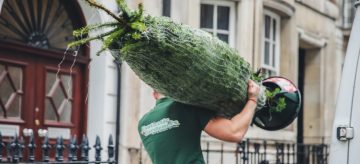
If you have decided to go green this year and you want to opt for an eco-friendly Christmas tree brought right to your front door, turn to a specialised company. Fantastic Services offers delivery of both pot-grown Christmas trees and fresh-cut trees, as well as a collection and recycling option after the holidays.
In this way, you won’t have to stress about what to do with your tree once Christmas is over, and how to dispose of it in an environmentally friendly way. We can also install your new Christmas evergreen, should you need help with it. Book a real Christmas tree delivery and collection today and have one thing less on your holiday to-do list.
Contact Fantastic Services and get a beautiful Christmas tree delivered to your home!

***
We would love to hear what you have to say about sustainable Christmas trees. Share your thoughts with us in the comments section below.








The only home improvement newsletter you will ever need!
We will never spam you. Pinky promise!
For more information, check out our privacy policy.