Most people assume a quick hoover and a wipe-down keeps their home healthy. It looks clean, so it must be fine, right? But a lot of what affects your family’s health at home isn’t visible at all. It’s buried in soft furnishings, hiding behind appliances, and floating through the air you breathe every day.
Professional cleaning reaches the places a Saturday morning tidy simply doesn’t. It’s not just about appearances. It’s about the air your family breathes, the surfaces your kids touch, and the invisible load your home puts on your body every single day. This post breaks down exactly how professional cleaning helps create a healthier home environment, and why it matters more than most people realise.
TL;DR
Professional cleaning removes deep-seated allergens like dust mites and mould spores that regular cleaning misses.
Specialist equipment significantly improves indoor air quality by extracting fine particles from carpets, upholstery, and surfaces.
High-touch areas harbour far more bacteria than most homeowners expect — professional cleaning addresses these systematically.
Eco-friendly, non-toxic products protect children and pets while still delivering a thorough clean.
A consistently clean home reduces stress and supports better focus and sleep.
Post-renovation clean-ups, seasonal deep cleans, and persistent allergy symptoms are clear signs it’s time to call in the professionals.
How Does Professional Cleaning Improve Health?
Professional cleaning improves health by removing the allergens, bacteria, and airborne pollutants that accumulate beyond the reach of everyday cleaning. Professionals use specialist equipment, targeted techniques, and effective products to address dust mites, mould spores, and germs in the places standard cleaning tools can’t properly treat. The result is better air quality, fewer allergy triggers, and a genuinely safer home.
Here’s the thing about household dirt: it doesn’t distribute itself evenly, and it doesn’t stay where you can see it. Dust mites live deep inside mattresses, sofas, and carpets. A single gram of dust can contain thousands of them. They don’t bite, but their waste particles are one of the most common triggers for asthma and allergic rhinitis in the UK.
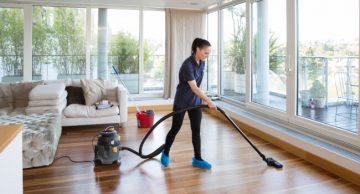
Standard vacuums pick up surface dust, but they’re not built to extract the microscopic particles that actually cause the trouble. Professional-grade equipment uses HEPA filtration, which captures particles as small as 0.3 microns. That’s the difference between moving dust around and actually removing it.
Mould is another one. It doesn’t always look dramatic. Sometimes it’s a faint grey patch behind the tumble dryer or a slight discolouration along the bathroom sealant. But mould spores spread through the air, settle in your lungs, and cause everything from persistent coughing to more serious respiratory problems. Professional cleaners know where to look, what to use, and how to treat it properly, rather than just bleaching over the surface.
If anyone in your household has asthma or allergies, professional cleaning frequency matters. Even a quarterly deep clean can make a measurable difference to symptoms.
What Are the Key Health Benefits of Professional Cleaning?
The health benefits of professional cleaning aren’t vague or theoretical. They’re measurable, and they show up in everyday life in ways people often don’t connect back to their home environment.
Reduced Allergens and Dust
Allergens don’t just sit still waiting to be wiped away. They float, resettle, and embed themselves into soft furnishings over time. Professional services tackle this with steam cleaning, HEPA-filtered vacuuming, and targeted treatment of high-allergen zones like bedrooms and living rooms.
The impact is noticeable. People with hay fever or dust allergies often report significantly fewer symptoms after a professional deep clean, simply because the particle load in their home drops dramatically. Less airborne debris means less irritation, fewer antihistamines, and better sleep. That’s not a small thing.
Fewer Germs on High-Touch Surfaces
Your kitchen worktop. Your light switches. The TV remote. The tap handle in the bathroom. These surfaces get touched constantly, by everyone, all day. Research consistently shows that high-touch surfaces carry far higher bacterial loads than most people expect, including strains like E. coli and Staphylococcus.
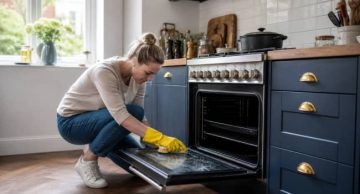
A professional cleaner works methodically through these areas using products that actually disinfect rather than just wipe. They’re also trained to avoid cross-contamination, which is something a quick kitchen cloth absolutely does not achieve. If you’ve ever used the same sponge on your worktop and your sink, you’ll know exactly what we mean.
Better Indoor Air Quality
Indoor air quality is often worse than outdoor air quality, particularly in well-insulated modern homes where ventilation is limited. Dust, pet dander, volatile organic compounds from furnishings, and cooking residues all build up inside. You’re breathing this in every day.
Regular professional cleaning systematically reduces the pollutant load in your home. Carpets get deep-extracted rather than surface-vacuumed. Upholstery gets treated. Hard-to-reach ledges and vents, the ones that collect dust silently for months, get cleared. Over time, this builds a noticeably cleaner breathing environment. That matters especially for children, elderly family members, or anyone with a lung condition.
Yes, and it’s worth getting specific, because this is genuinely underappreciated. Cleaning isn’t just a physical health issue. It has a real effect on how your brain functions day to day.
Research in environmental psychology has found that physical clutter and disorder compete for your attention, even when you’re not consciously focused on them. Your brain keeps registering the mess in the background. That low-level cognitive noise adds up. It increases stress hormone levels, interferes with concentration, and can noticeably affect your mood over the course of a day.
A professionally cleaned home removes that background noise. When you walk into a room that’s genuinely clean, not just tidy, there’s an immediate sense of calm. Your brain stops running that low-level “things need doing” loop, and you can actually relax.
This matters even more in home working environments. A clean desk space has a measurable impact on focus and output. Clutter and grime are distractions. A clean space signals to your brain that it’s time to work, and that signal is stronger than most people give it credit for.
There’s also the emotional side. Coming home to a clean house after a long day feels completely different to walking into disorder. It’s the difference between your home feeling like a retreat and feeling like another item on your to-do list. That shift has a real effect on stress levels and overall wellbeing over time.
Are Eco-Friendly Products Safe Enough to Actually Work?
Yes. The assumption that professional cleaning means harsh chemicals and a sharp smell that lingers for hours is outdated. Most reputable professional cleaners now use eco-friendly, non-toxic products as standard, and for good reason.
Conventional cleaning products often contain chemicals that irritate airways, trigger skin reactions, or leave residues on surfaces that children and pets then come into contact with. Kids especially spend a lot of time on floors. They touch surfaces and then touch their faces. The products used to clean those surfaces matter more than most people think.
Eco-friendly professional cleaning products are formulated to be effective without the harmful side effects. They break down naturally, don’t release damaging compounds into the air, and are safe for households with young children or pets. You get a genuinely clean home without trading one health risk for another.
Non-toxic formulas reduce chemical residue on floors and surfaces that children contact daily.
Eco-friendly products don’t release harmful volatile organic compounds into your indoor air.
Biodegradable cleaning agents are safer for septic systems and local waterways.
Plant-based formulas are gentler on surfaces, extending the life of flooring and upholstery.
Fragrance-free options are available for households where synthetic scents trigger sensitivities.
It’s also worth knowing that professional cleaners understand dilution ratios and application methods in ways that genuinely matter for safety. Using too much of even a gentle product, or applying it in the wrong context, can cause problems. Professionals get this right consistently, which is harder than it sounds when you’re rushing through it yourself on a weekend.
A regular home cleaning service covers everything from vacuuming and surface sanitisation to bathroom and kitchen hygiene, keeping your home maintained to a standard that supports long-term health rather than relying on the occasional one-off effort.
You don’t need to wait until your home looks visibly neglected. Some of the clearest signals that you need professional help are the ones you smell or feel rather than see.
Here are the most common situations where professional cleaning genuinely makes a difference:
Persistent musty or stale odours that don’t clear even after ventilating the room.
Visible mould patches, even small ones, especially in bathrooms, kitchens, or near windows.
Allergy or asthma symptoms that seem worse at home than they are outside.
Post-renovation dust and debris, which spreads far further than the work area and contains fine particles that linger in the air for days.
Moving into a new property where you don’t know the cleaning history.
Seasonal transitions, particularly spring, when accumulated indoor pollutants benefit from a systematic clear-out.
Post-renovation clean-ups deserve a special mention. Building work, even a small job, releases plaster dust, wood particles, and other fine debris that settles across the entire property. This is genuinely hard to shift with standard cleaning tools, and it stays in your air for days if not properly extracted. A professional clean after any renovation work isn’t a luxury. It’s necessary.
Mould is another situation people delay too long on. If you spot it, don’t just wipe it with bleach and move on. That approach kills the surface growth but leaves the underlying problem untreated. Professionals identify the source, treat it properly, and can advise on what’s causing the damp in the first place.
Seasonal deep cleans, twice a year as a minimum, help prevent the build-up that makes cleaning harder and health risks higher over time.
How much does home cleaning cost?
Get an instant quote for professional home cleaning in your area.
Professional cleaning does something a regular tidy-up simply can’t: it gets to the hidden stuff. The allergens, the bacteria, the airborne particles, and the mould that build up quietly and affect your family’s health in ways you might not even connect back to your home. It’s a practical investment, not a luxury one.
Whether you’re dealing with persistent allergy symptoms, recovering from building work, or just noticing your home never quite feels fresh despite your efforts, bringing in professional help is one of the most straightforward things you can do for your household’s health. Your home should feel like a retreat. With the right help, it can.